
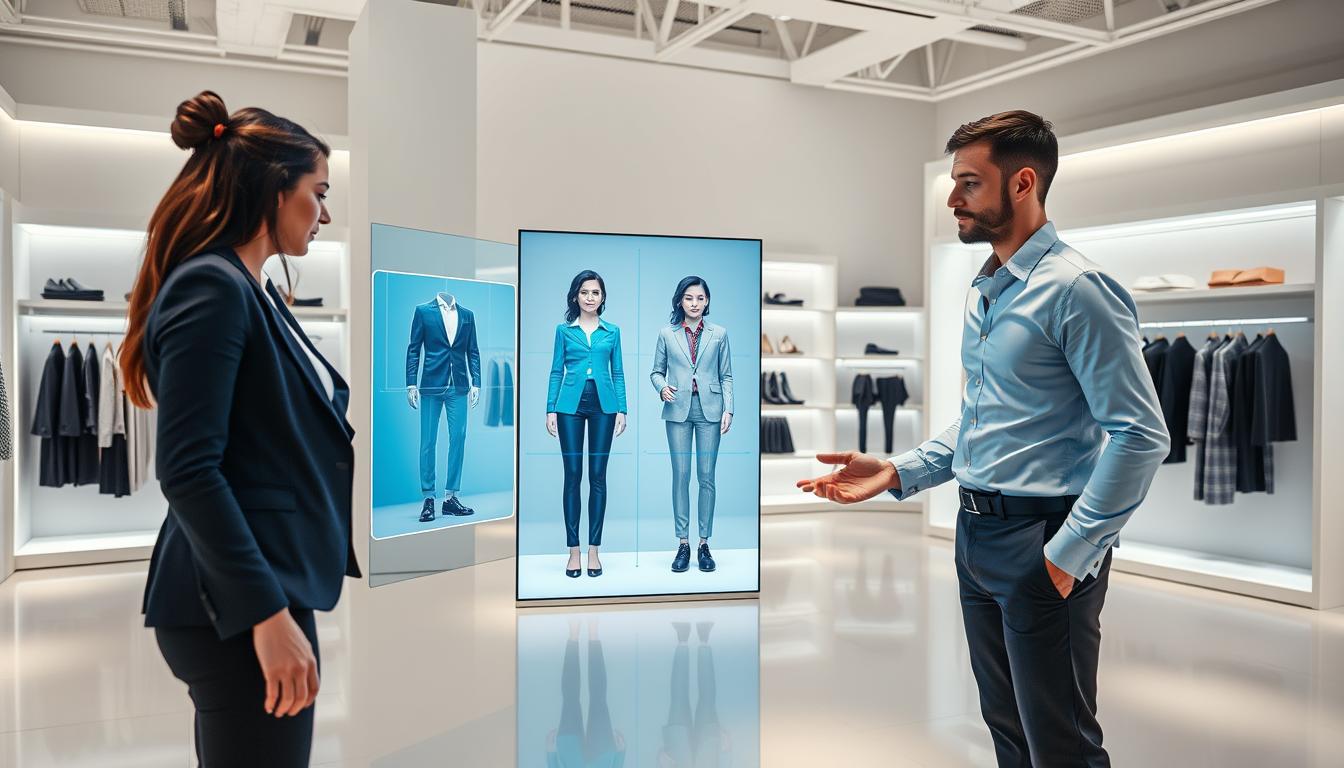
The emergence of “undress AI” tools has sparked intense debate, raising questions about both creative possibilities and serious ethical concerns. Virtual clothing try-on is revolutionizing the fashion industry, but it also poses significant challenges.
As we explore this technology, we must consider its potential applications and the controversy surrounding it. The ability to digitally alter clothing and try on outfits virtually is changing how we interact with fashion.
We will examine the implications of this technology and what it means for the future of fashion and beyond.
Key Takeaways
- The “undress AI” technology is sparking debate due to its potential creative and ethical implications.
- Virtual clothing try-on is transforming the fashion industry.
- The technology raises significant ethical concerns that need to be addressed.
- Potential applications include changing how we interact with fashion.
- The future of fashion and related industries may be significantly impacted.
Introduction to AI Undressing
With the advent of AI undressing, the boundaries between physical and digital fashion are becoming increasingly blurred. AI undressing technology represents a significant leap forward in how we experience and interact with digital fashion.
This technology allows for the creation of virtual dressing rooms where users can see how clothing fits without physically trying it on. As we explore the capabilities and implications of AI undressing, it’s essential to understand its core components and the value it brings to both consumers and businesses.
Defining AI Undressing Technology
AI undressing technology utilizes advanced algorithms to simulate the process of trying on clothing virtually. This is achieved through sophisticated visual recognition software that can accurately map clothing onto a digital representation of a person.
The key features of AI undressing technology include:
- Advanced visual recognition capabilities
- Realistic simulation of clothing on digital models
- Integration with virtual try-on platforms
Importance of AI in Fashion and Media
The integration of AI in fashion and media is transforming these industries in profound ways. AI undressing technology, in particular, is enhancing the online shopping experience by providing customers with a more accurate and engaging way to try on clothes virtually.
Some of the key benefits include:
- Increased customer satisfaction through more accurate virtual try-ons
- Reduced return rates for online purchases
- Enhanced brand engagement through interactive experiences
As AI continues to evolve, its role in shaping the future of fashion and media will only continue to grow. By understanding and leveraging AI undressing technology, businesses can stay ahead of the curve and provide their customers with innovative and engaging experiences.
How AI Undressing Works
The process of AI undressing involves advanced visual recognition algorithms and detailed image modeling. At its core, AI undressing technology utilizes complex neural networks trained on vast datasets of images to understand and manipulate visual data.
Algorithms Behind Visual Recognition
The algorithms used in AI undressing are primarily based on deep learning techniques, which enable the system to learn from large datasets and improve over time. These algorithms are crucial for identifying patterns in images and generating accurate models.
Key Components of Visual Recognition Algorithms:
- Convolutional Neural Networks (CNNs) for image processing
- Generative Adversarial Networks (GANs) for generating realistic images
- Recurrent Neural Networks (RNNs) for sequential data processing
Data Input: Images and Modeling
The quality and quantity of data input directly impact the performance of AI undressing technology. The system requires a vast dataset of images to learn from, including various poses, clothing, and lighting conditions.
Data Input Requirements:
| Data Type | Description | Importance |
|---|---|---|
| Image Data | High-resolution images of individuals in various attire | High |
| Modeling Data | 3D models of human anatomy for accurate representation | High |
| Metadata | Additional information such as clothing type and context | Medium |
By combining advanced algorithms with comprehensive data input, AI undressing technology can provide accurate and realistic results, revolutionizing industries such as fashion and entertainment, and acting as a digital wardrobe assistant or providing ai outfit recommendation.
Applications of AI Undressing
With its ability to simulate realistic visuals, AI undressing is finding diverse applications across industries. We are witnessing a significant transformation in how businesses operate, particularly in sectors that heavily rely on visual presentation and customer interaction.
Fashion and Virtual Try-Ons
The fashion industry is one of the primary beneficiaries of AI undressing technology. By enabling virtual clothing try-on, businesses can offer their customers a more immersive shopping experience. This technology allows users to see how garments would fit without physically trying them on. Our analysis shows that this not only enhances customer satisfaction but also reduces return rates for online purchases.
Designers are also leveraging AI undressing to create more personalized and engaging experiences. For instance, AI-powered tools are being used to simulate how different fabrics and designs would look on various body types, revolutionizing the design process.
| Industry | Application | Benefit |
|---|---|---|
| Fashion | Virtual Try-Ons | Enhanced Customer Experience |
| Entertainment | Realistic Visual Effects | Increased Engagement |
| Retail | Personalized Shopping | Improved Sales |
Entertainment Industry Trends
In the entertainment industry, AI undressing is being utilized to create more realistic visual effects. This technology is particularly useful in film and video game production, where realistic character modeling is crucial. By accurately simulating clothing and fabric movements, AI undressing contributes to a more immersive viewing experience.
Retail Innovations and Customer Experience
Retailers are also adopting AI undressing to innovate their customer experience. By integrating personalized fashion software, retailers can offer tailored recommendations based on a customer’s body type, preferences, and purchase history. This personalized approach not only enhances customer satisfaction but also drives sales.
Furthermore, AI undressing enables retailers to create interactive and engaging in-store experiences. For example, virtual try-on mirrors are becoming increasingly popular, allowing customers to try on clothes virtually and share photos on social media, thereby increasing brand engagement.
Ethical Considerations in AI Undressing
With the growing capabilities of AI undressing, ethical concerns have become a pressing issue. As we continue to innovate and push the boundaries of what is possible with virtual fashion technology, it is crucial that we address the implications of these advancements on individuals and society.
Consent and Privacy Issues
One of the primary ethical considerations surrounding AI undressing is the issue of consent and privacy. The technology’s ability to manipulate images raises profound questions about who has the right to alter or distribute such content. Consent must be informed and freely given, but the complexity of digital media makes this challenging.
“The line between innovation and invasion of privacy is becoming increasingly blurred with AI undressing technology.”
To better understand these issues, let’s examine some key aspects:
- The role of data protection in AI undressing
- The potential for misuse of manipulated images
- The need for clear guidelines on consent
| Aspect | Description | Implication |
|---|---|---|
| Data Protection | Safeguarding user data from unauthorized access | Prevents misuse of personal images |
| Image Manipulation | Altering images using AI undressing technology | Raises concerns about authenticity and consent |
| Guidelines on Consent | Establishing clear rules for obtaining consent | Ensures that individuals are aware of how their images are used |
Addressing Objectification Concerns
Another significant ethical consideration is the potential for AI undressing to contribute to the objectification of individuals, particularly women. The reduction of a person to a mere digital representation can have profound societal implications, including the perpetuation of harmful stereotypes and the erosion of respect for personal autonomy.
To mitigate these risks, it is essential to develop and implement AI undressing technology in a responsible manner, with careful consideration of its potential impact on society. By doing so, we can harness the benefits of virtual fashion technology while minimizing its negative consequences.
The Technology Behind AI Visuals
Understanding the technology behind AI visuals requires a deep dive into the world of neural networks and machine learning. The tools utilize advanced AI models to analyze images, identify clothing, and generate depictions of the figures beneath. This complex process is made possible by sophisticated algorithms and significant computational power.
Neural Networks Explained
Neural networks are a fundamental component of AI undressing technology. They are designed to mimic the human brain’s ability to recognize patterns and make decisions based on that recognition. By training on vast datasets of images, these networks can learn to identify clothing and other visual elements with high accuracy.
Key aspects of neural networks include:
- Layered architecture that allows for complex data processing
- Ability to learn from large datasets
- Capacity to improve accuracy over time through training
Machine Learning Techniques in Use
Machine learning techniques play a crucial role in the development of AI undressing technology. By leveraging machine learning algorithms, developers can create systems that not only analyze visual data but also generate realistic depictions. This involves training models on extensive datasets to ensure accuracy and reliability.
The integration of machine learning enables the digital wardrobe assistant to provide users with a seamless and intuitive experience. As the technology continues to evolve, we can expect to see significant advancements in how AI visuals are generated and utilized.
By combining neural networks and machine learning techniques, AI undressing technology can offer innovative solutions for various industries, including fashion and entertainment. The potential applications are vast, and the technology is poised to revolutionize how we interact with visual content.
Consumer Reaction and Engagement
We observe a significant shift in consumer behavior with the advent of AI undressing, influencing both acceptance and engagement. As this technology continues to evolve, understanding consumer reactions becomes crucial for its successful integration into various industries.
Trends in User Acceptance
The appeal of AI undressing lies in its ability to generate images that appear natural while achieving the desired transformations. This has led to a growing trend of user acceptance, particularly among younger demographics who are more familiar with digital technologies.
Key factors influencing user acceptance include:
- Perceived ease of use
- Quality of generated images
- Privacy and security measures
As these factors improve, we can expect to see higher rates of user acceptance and more widespread adoption of AI undressing technology.
The Impact of Social Media
Social media platforms play a significant role in shaping consumer reactions to AI undressing. Through platforms like Instagram and TikTok, users are exposed to a myriad of virtual dressing rooms and AI-generated content, influencing their perceptions and acceptance of this technology.
The impact of social media can be seen in several ways:
- Increased exposure to AI-generated content
- Influencer marketing and sponsored content
- User-generated content and community engagement
By leveraging these aspects, brands can enhance consumer engagement and foster a more positive reaction to AI undressing technology.
Challenges Facing AI Undressing
As AI undressing technology advances, it faces several challenges that impact its effectiveness and user experience. The complexity of this technology means that its development and implementation are not straightforward.
Technical Limitations and Accuracy
One of the primary challenges is the technical limitation and accuracy of AI undressing. The results can vary significantly depending on the algorithm used, the quality of the original image, and the intended use. For instance, personalized fashion software relies heavily on accurate image processing to provide users with a realistic virtual try-on experience.
To improve accuracy, developers must continually update and refine their algorithms to handle diverse inputs and scenarios. This includes enhancing the ability to understand different fabrics, textures, and how clothing fits various body types.
Cultural Sensitivity in AI Design
Cultural sensitivity is another critical challenge. AI undressing technology must be designed to be respectful and appropriate across different cultures. This involves understanding and incorporating cultural norms and preferences into the AI’s design and functionality.
For example, virtual fashion technology should be able to accommodate different cultural dress codes and preferences, ensuring that the technology is both useful and respectful to all users. This requires a deep understanding of cultural nuances and the ability to adapt the technology accordingly.
By addressing these challenges, we can ensure that AI undressing technology is both effective and culturally sensitive, providing a positive experience for users worldwide.
Future of AI Undressing Technology
As AI technology continues to evolve, the future of AI undressing is poised to revolutionize multiple industries. The potential developments on the horizon are vast and varied, promising significant impacts on how we interact with digital content.
Potential Developments on the Horizon
The advancements in AI undressing technology are expected to bring about several key developments. These include:
- Enhanced visual recognition capabilities, allowing for more accurate and detailed digital representations.
- Integration with virtual and augmented reality technologies to create immersive experiences.
- Improved AI fashion styling tools that can assist designers and consumers alike in creating and visualizing clothing.

Long-Term Implications for Industries
The long-term implications of AI undressing technology are far-reaching, affecting various sectors such as:
- Fashion: With the ability to virtually try on clothes, the fashion industry is likely to see a shift in how clothing is marketed and sold.
- Entertainment: AI undressing can enhance special effects in movies and video games, creating more realistic digital characters.
- Retail: Personalized shopping experiences can be created using AI undressing technology, improving customer satisfaction.
As we move forward, it’s essential to consider the ethical implications and ensure that the technology is developed responsibly. The future of undress ai holds much promise, but it must be harnessed carefully to benefit society as a whole.
Case Studies of AI Undressing
Several pioneering brands are now utilizing AI undressing technology to enhance customer experience and engagement. This technology is not only limited to the fashion industry but is also making significant inroads in the entertainment sector.
Notable Brands Using AI in Fashion
The fashion industry has seen a significant shift with the adoption of AI undressing technology. Brands are leveraging this innovation to offer virtual clothing try-on experiences, allowing customers to see how garments fit without physically wearing them.
For instance, companies like Gucci and Zara have started incorporating AI-driven try-on features in their online stores. This not only enhances customer satisfaction but also reduces return rates due to incorrect sizing.
| Brand | AI Feature | Benefit |
|---|---|---|
| Gucci | Virtual Try-On | Enhanced Customer Experience |
| Zara | Digital Wardrobe Assistant | Personalized Recommendations |
| Nike | AI-driven Product Customization | Increased Customer Engagement |
Successful Campaigns in Entertainment
The entertainment industry is also benefiting from AI undressing technology, particularly in creating immersive experiences for audiences. For example, AI-generated content is being used to create realistic character designs and environments.
Moreover, AI undressing is being utilized in movie production to generate special effects and to create virtual characters that can be manipulated in real-time. This technology is opening new avenues for storytelling and audience engagement.
- Enhanced visual effects
- Increased creativity in character design
- Improved audience engagement through immersive experiences
As AI undressing technology continues to evolve, we can expect to see even more innovative applications across various industries.
Understanding Consumer Privacy
With the advancement of AI undressing, understanding and protecting consumer privacy is more important than ever. As we continue to integrate AI technologies into various aspects of our lives, the need for robust privacy measures becomes increasingly critical.
The use of AI in fashion and media, such as AI undressing tools, raises significant privacy concerns. These technologies often require vast amounts of personal data, including images and other sensitive information, to function effectively.
Data Security Measures
To address these concerns, it’s essential to implement robust data security measures. This includes:
- Encrypting sensitive data both in transit and at rest
- Implementing strict access controls to prevent unauthorized data access
- Regularly updating and patching systems to protect against known vulnerabilities
By taking these measures, we can significantly reduce the risk of data breaches and protect consumer privacy.
Legal Frameworks Surrounding AI Use
Legal frameworks play a crucial role in protecting consumer privacy in the context of AI undressing. Regulations such as the General Data Protection Regulation (GDPR) in the European Union and the California Consumer Privacy Act (CCPA) in the United States set important standards for data privacy.
| Regulation | Description | Impact on AI Undressing |
|---|---|---|
| GDPR | Comprehensive data protection regulation in the EU | Requires explicit consent for data processing |
| CCPA | Data privacy law in California, USA | Grants consumers rights over their personal data |
Understanding and complying with these regulations is crucial for businesses using AI undressing technologies, especially those that offer ai outfit recommendation and personalized fashion software.
AI Undressing in Advertising
The advent of AI undressing technology is revolutionizing the advertising landscape. As brands look for innovative ways to capture consumer attention, AI undressing is emerging as a powerful tool. It enables marketers to create highly personalized and engaging advertisements that resonate with their target audience.
Shifting Marketing Strategies
Traditional marketing strategies are being redefined with the integration of AI undressing. By leveraging virtual fashion technology, brands can now offer virtual try-ons, enhancing the customer experience and increasing conversion rates. This shift is not just about aesthetics; it’s about creating a more immersive and interactive experience for consumers.
According to industry experts, “The use of AI in advertising is not just a trend, it’s a significant shift in how brands will engage with consumers in the future.” This is reflected in the growing adoption of AI-driven advertising solutions across various industries.
Engaging Audiences Creatively
AI undressing allows for a more creative approach to audience engagement. By utilizing undress ai, marketers can create dynamic content that adapts to individual consumer preferences. This not only enhances brand recall but also fosters a deeper connection between the brand and its audience.
The tools offer advanced features and promise impressive outputs, enhancing creative endeavors. For instance, AI-generated content can be tailored to specific demographics, ensuring that the message resonates with the intended audience.
“The future of advertising lies in its ability to personalize and engage. AI undressing is at the forefront of this revolution, offering unprecedented opportunities for brands to connect with their audiences.”
The Debate: Innovation vs. Ethics
The intersection of AI and fashion has ignited a critical conversation about the need to balance technological advancements with ethical responsibility. As we continue to witness the growth of AI undressing technology, it’s essential to consider the diverse perspectives on its use and the implications for our industry.
Balancing Progress with Responsibility
On one hand, AI undressing technology has the potential to revolutionize the fashion industry through ai fashion styling and virtual dressing room experiences. These innovations can enhance customer engagement and streamline the shopping process. However, we must also acknowledge the ethical considerations surrounding privacy, consent, and potential misuse.
To strike a balance, we need to implement robust data security measures and ensure transparency in how AI is used. This includes obtaining informed consent from users and being mindful of the potential for objectification.
Diverse Perspectives on AI Use
There are varied viewpoints on the use of AI undressing technology. Some argue that it represents a significant step forward in fashion technology, enabling new forms of creative expression and customer interaction. Others express concerns about the potential for AI to be used in ways that infringe on personal privacy or perpetuate harmful stereotypes.
As we move forward, it’s crucial to foster an open dialogue that considers these diverse perspectives. By doing so, we can work towards a future where AI enhances the fashion industry while respecting ethical boundaries.
Ultimately, the debate between innovation and ethics in AI undressing technology is complex and multifaceted. By engaging with the various stakeholders and considering the ethical implications, we can navigate this challenge and create a future where technology and responsibility coexist.
Educational Resources on AI Technologies
To deepen our understanding of AI technologies, such as digital wardrobe assistants and AI outfit recommendations, it’s essential to explore available educational resources. As AI continues to transform industries, staying informed about its capabilities and limitations is paramount.
Key Literature for AI Enthusiasts
For those looking to dive deeper into AI, several books and journals offer valuable insights. Some recommended texts include “Deep Learning” by Ian Goodfellow, Yoshua Bengio, and Aaron Courville, and “Pattern Recognition and Machine Learning” by Christopher Bishop.
Journals such as the Journal of Machine Learning Research and IEEE Transactions on Neural Networks and Learning Systems publish cutting-edge research on AI and machine learning.
Online Educational Opportunities
Online courses and workshops provide flexible learning options for those interested in AI. Platforms like Coursera, edX, and Udemy offer a wide range of courses on AI and related topics.
| Platform | Course Name | Duration |
|---|---|---|
| Coursera | AI For Everyone | 4 weeks |
| edX | Introduction to AI | 6 weeks |
| Udemy | AI and Machine Learning Bootcamp | 12 weeks |
Conclusion: The Future of AI Undressing
As we explore the vast potential of AI undressing, it’s clear that this technology is poised to revolutionize the fashion and entertainment industries. By leveraging personalized fashion software, brands can create immersive experiences that cater to individual tastes.
Key Developments
The integration of virtual fashion technology is transforming the way we interact with clothing and accessories. This innovation enables users to try on outfits virtually, reducing the need for physical prototypes and enhancing customer satisfaction.
What’s Next
Looking ahead, we anticipate that AI undressing will continue to evolve, driven by advancements in machine learning and computer vision. As this technology progresses, we can expect to see new applications in fields such as retail, advertising, and media production.
By embracing these innovations, industries can unlock new revenue streams and improve customer engagement. As we move forward, it’s essential to balance technological progress with responsible practices, ensuring that AI undressing is developed and used in ways that benefit society as a whole.